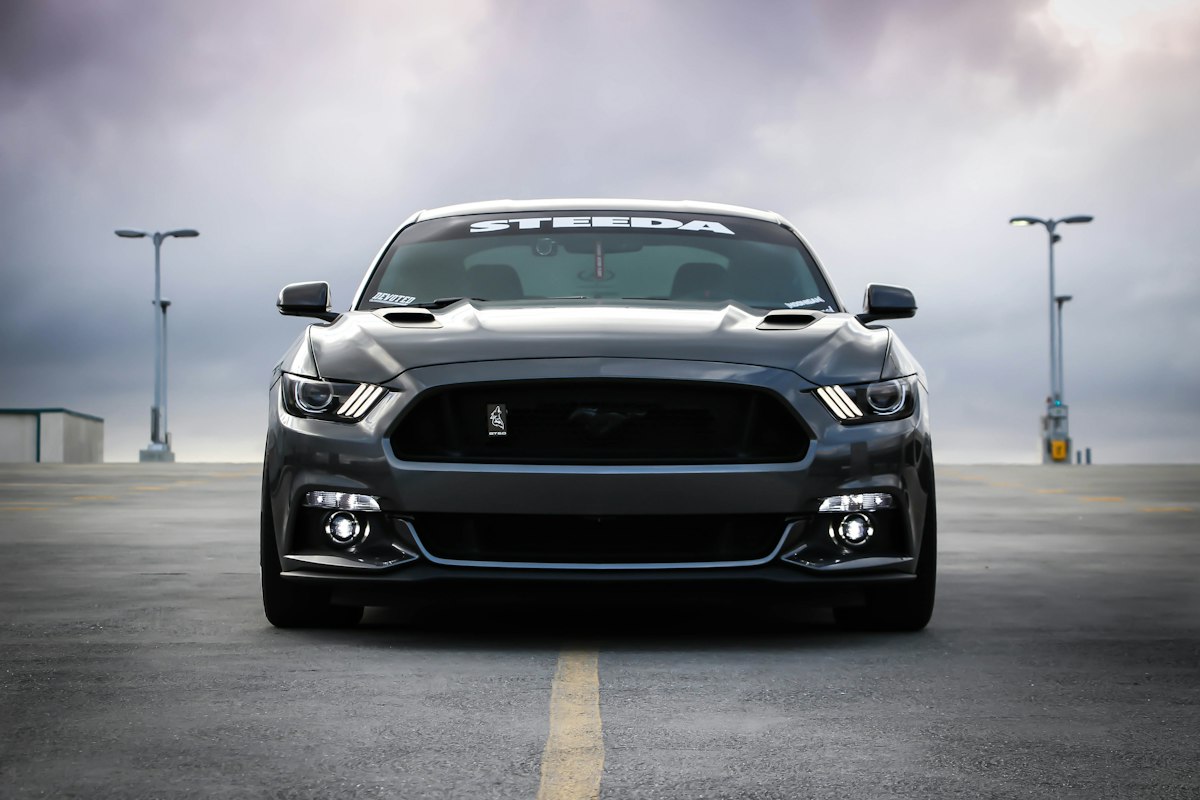
You've spent years - maybe decades - tracking it down. Weekends under the hood, sourcing original parts across three states, a restoration that cost more than your first house. And then someone asks if it's insured, and you say "yeah, it's on my regular auto policy."
That's a problem. A significant one.
Standard auto insurance treats your 1967 Mustang Fastback the same way it treats a 2019 Honda Civic. It depreciates the value over time. It pays you what the car is worth on a bad day - not what it cost you to build, restore, and preserve. For a daily driver, that's fine. For a collector vehicle, it's a recipe for financial loss exactly when you can least afford it.
Ask us what collector car coverage is available for your vehicle and how its value would be set. Real coverage for a car you've spent years building.
Here's what makes classic and collector car insurance different, who needs it, and how to make sure your vehicle is actually protected the way it deserves.
Standard personal auto policies use Actual Cash Value (ACV) to settle claims. ACV factors in depreciation: the older the car, the less the insurer pays. For most vehicles, that's logical. But collector cars often do the opposite of depreciate. A concours-condition 1969 Camaro SS or a low-mileage air-cooled Porsche 911 can be worth more today than it was five years ago. (For how regular auto coverage works in Indiana, see what car insurance Indiana requires.)
Under an ACV policy, if your $85,000 restored classic is totaled in an accident, your insurer might offer you $12,000 because that's what they consider the "market value" of a vehicle of that year and model. The dispute that follows is a nightmare - and you rarely win.
The cornerstone of a good classic car policy is agreed value coverage (not to be confused with "stated value"; more on that distinction in a moment). Here's how it works:
Before the policy is issued, you and your insurer agree on the vehicle's insured value - say, $72,000 for a restored 1970 Chevelle SS 454. That figure is documented, signed off by both parties, and locked into the policy. If the car is totaled, you receive $72,000. No negotiation. No depreciation calculation. No insurer sending an ACV adjuster who's never seen a matching-numbers car in his life.
Some collectors discover too late that "stated value" is not the same as "agreed value." Under stated value policies, the insurer pays the lesser of the stated amount or the ACV at time of loss. This is essentially a worst-of-both-worlds product - you pay higher premiums than standard auto, but your payout is still subject to depreciation-based adjustment. Always confirm you're getting agreed value, not stated value.
Ask your agent for the specific policy wording. The phrase you want to see is "in the event of total loss, we will pay the agreed value as listed in the Declarations page." If the policy says "lesser of agreed value or actual cash value," it's a stated value product - not agreed value.
Beyond agreed value, specialty classic car carriers build in features that standard auto insurers don't offer - or charge enormous endorsement premiums for.
| Coverage Feature | Standard Auto | Collector Policy |
|---|---|---|
| Agreed/Guaranteed Value Settlement | ❌ | ✅ Standard |
| Spare Parts & Tools Coverage | ❌ | ✅ Often included (limits vary) |
| Flatbed Towing to Preferred Shop | ⚠️ Basic roadside only | ✅ Often included |
| Car Show & Track Day Coverage | ❌ | ✅ Static display; some track coverage |
| Inflation Guard / Annual Value Review | ❌ | ✅ Annual or on-request adjustments |
| No Mileage Surcharges | ❌ Mileage-based rating | ✅ Low/pleasure use discounts standard |
| OEM & Original Parts Preference | ❌ Aftermarket default | ✅ Original or OEM parts specified |
Most specialty carriers apply a few basic eligibility requirements. The exact thresholds vary by company, but here's what to expect:
The classic car insurance market has expanded well beyond muscle cars and vintage imports. Today's specialty policies cover a broad range of collector vehicles:
The agreed value in your policy is only as strong as the documentation behind it. Going through a claim with incomplete records is a collector's worst nightmare. Get ahead of it with proper documentation before you ever need it.
The collector car market moves fast, and a car's value can climb when comparable sales rise. Review your agreed value every 12 to 18 months and ask for an update if recent sales suggest your vehicle has appreciated.
When you look at collector car coverage, don't stop at the premium. Ask about the claims process: "If my car is totaled, walk me through exactly what happens and what I receive." Ask whether you can use your preferred restoration specialist. Good collector policies pay agreed value promptly, allow OEM or period-correct parts and don't treat a show car like a salvage-title commuter.
Collector car coverage can cost less than you'd expect, because the risk profile is different. You're not driving the car to work in rush-hour traffic. It's garaged, driven sparingly and owned by someone who is typically experienced and careful.
What you'll pay depends on the vehicle, its agreed value, how and where it's stored, how much you drive it and your driving record. Multi-vehicle discounts may be available if you insure more than one collector vehicle.
Ask us what collector car coverage is available for your vehicle and how its agreed value would be documented. Our car insurance quote checklist covers what to have ready for your everyday cars, too.
Standard auto insurance was designed for the car you drive to work - a depreciating asset that gets replaced every few years. Your collector vehicle is the opposite of that. It's appreciating, irreplaceable, and the result of real financial and personal investment.
Getting collector car coverage is one of the smartest things you can do for a vehicle you care about: agreed value protection, original parts coverage, flatbed towing and show coverage, often at a lower price than owners expect.
The worst time to discover your policy isn't right is after a loss. Get a specialty quote today and make sure the protection matches the car.
